

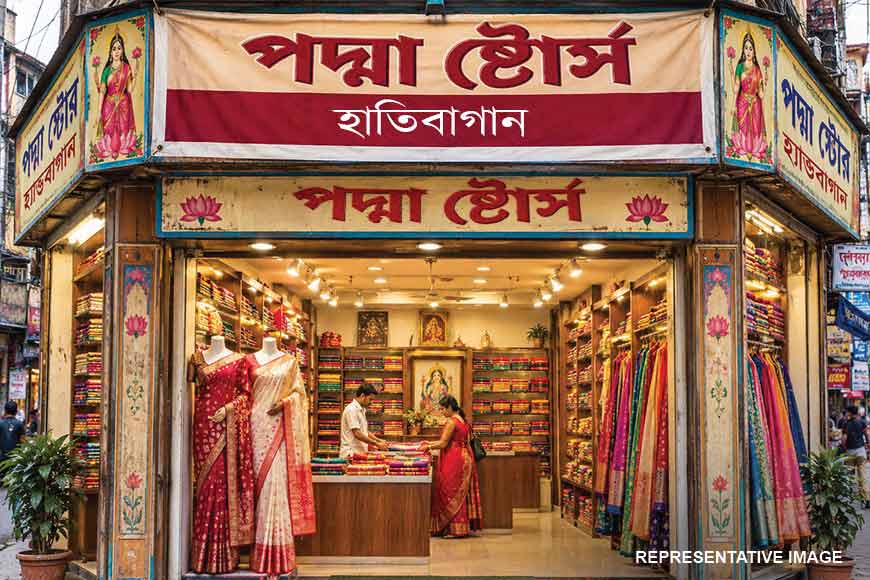
No fancy marketing, no luxury campaigns, just trust and quality. For decades, these two values remained at the heart of Hatibagan’s Padma Stores. After more than six decades of legacy, the old North Kolkata name is now making its way back to the modern generation, this time through the digital space.
In 1962, the same year as the Indo-China War, Padma Stores started its journey on paper, while the store officially began its operations in 1965. Shri Nimai Chand Banik and his brother took the initiative to build a quality textile hub in North Kolkata, bringing different kinds of textiles under one roof, from sarees to readymade outfits. According to the family, the store sourced exceptional textile pieces from different parts of India, giving customers access to a wide variety in one place.
Also read : The engineer who runs Kolpotoru Paan shop
The timing was significant. Kolkata in the 1960s was already an important centre for textile trading, with the city’s wholesale markets, neighbourhood stores, handloom networks and street sellers forming a large interconnected ecosystem. Burrabazar was a major centre for textile and garment trade, while areas such as Gariahat were developing rapidly as retail destinations.
The textile culture of the city was also being reshaped by Partition. Many people who came to West Bengal from East Pakistan had existing connections with weaving, garment and textile trading communities. During the 1960s, refugee traders in Gariahat began selling textiles, particularly traditional handloom sarees, through footpath stalls. Their links with weaving communities in Bengal helped create new retail networks between weavers, traders and customers.
For generations of North Kolkata residents, Hatibagan was more than just a market. It was a familiar shopping destination where customers returned to stores they already knew. Padma Stores became a part of that culture.
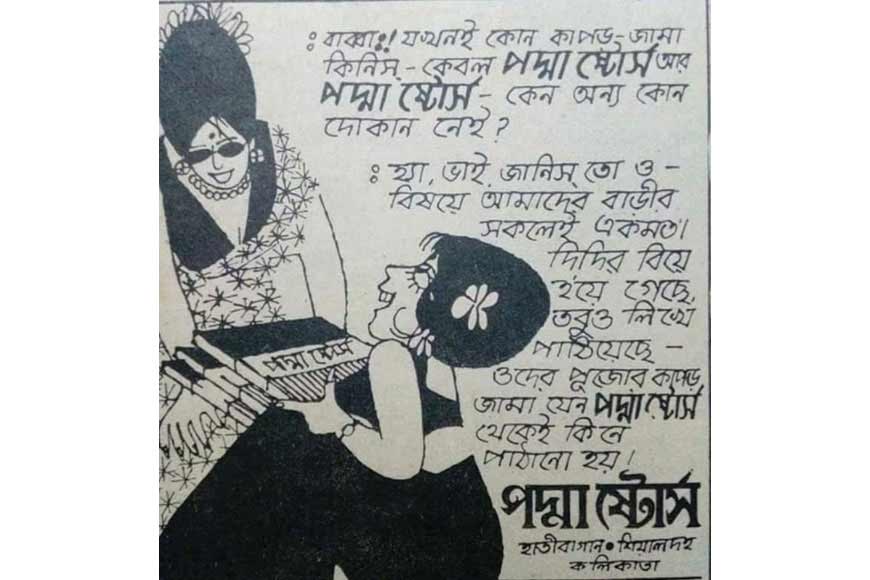
At the same time, handloom was not limited to street markets. Established stores were selling traditional handloom silk and cotton sarees alongside other textile products. The emergence of shops such as Arttext in Gariahat in the 1960s also reflects how Kolkata’s textile retail culture could combine craftsmanship, design and a distinct store identity.
It was in this changing textile landscape that Padma Stores established its own identity in Hatibagan. The store’s strength was not aggressive advertising or expensive campaigns. Instead, it was the quality of its products and the trust it built with its customers.
For generations of North Kolkata residents, Hatibagan was more than just a market. It was a familiar shopping destination where customers returned to stores they already knew. Padma Stores became a part of that culture. Once customers experienced the quality of its products, many continued to return over the years. Its reputation travelled largely through customers themselves, rather than through large-scale promotion.

This old-fashioned relationship between a shop and its customers became one of Padma Stores’ biggest strengths. The brand did not need to constantly tell people that it was trustworthy. Its customers carried that memory forward.
The importance of this legacy can also be understood from the store’s later years. By 2014, when Hatibagan was facing increasing pressure from pavement encroachment, the Times of India reported that the once-famous Padma Stores was struggling to attract new customers. As a result, the customers who had been shopping at the store for years continued to come, but the store was finding it difficult to reach new ones because its visibility had been affected.
This is perhaps what makes the story of Padma Stores different from that of a conventional retail business. Its strongest asset was already sitting with its customers, the memory of the store.
Till 2018, Shri Bimal Banik, son of Nimai Chand Banik, took charge of the business. However, the store later began facing financial difficulties, which, according to the family, were primarily linked to a deception involving an external source. With Mr Banik also facing difficulties in managing the business due to his age, the store gradually went into a period of inactivity. The legacy eventually came to a pause around the Covid-19 period.
After a gap of around six to seven years, Padma Stores is now attempting to revive that legacy with the same core essence, quality, craftsmanship, and trust.
Bimal Banik’s son, Deb Kumar Banik, has now taken charge of the brand and is bringing Padma Stores online. The revived store is currently focusing on sarees woven in Bengal and in other states of India, with an emphasis on their artistic and traditional richness. Instead of trying to recreate the old store exactly as it was, the new generation is attempting to carry its essence into a new retail environment.
In a conversation with GetBengal, Deb Kumar Banik said, “We are making a soft launch online of our legacy, Padma Store, and focusing on PAN India reach through digital media and exhibitions.”
He also recalled the response he received after the brand started running advertisements and participating in exhibitions: “When we restarted Padma Stores and ran ads along with some exhibitions, people contacted me saying, ‘Is that the Padma Stores of Hatibagan?’ Therefore, I have accumulated a few customers in advance.”
From a North Kolkata store built on personal trust to a new-age brand looking towards a pan-India audience, Padma Stores is now trying to bridge two generations of textile retail.
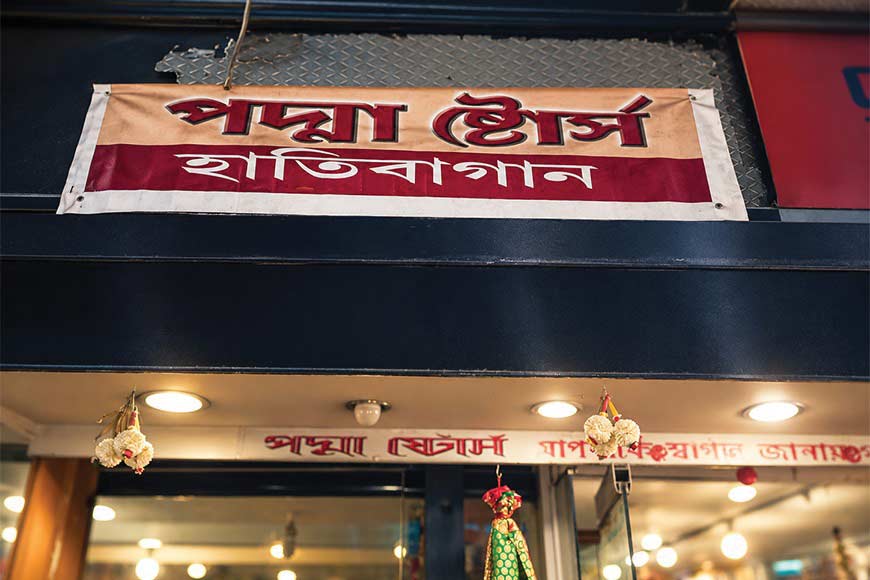
That reaction perhaps says more about the brand’s legacy than any advertisement could. Even after years of silence, the name Padma Stores was still familiar to some customers.
Now, in the festive atmosphere of Durga Puja, the brand’s successor is organising an exhibition at The Villa, Mandeville, on September 26 and 27, 2026, from 12 PM to 9 PM. The exhibition will bring together more than 50 homegrown brands, offering visitors an opportunity to explore artistically rich sarees from across India and add some of them to their collections.
From a North Kolkata store built on personal trust to a new-age brand looking towards a pan-India audience, Padma Stores is now trying to bridge two generations of textile retail. At the heart of its revival remains the same idea with which the journey began: quality that people remember and trust that brings them back.




Comments via Facebook