
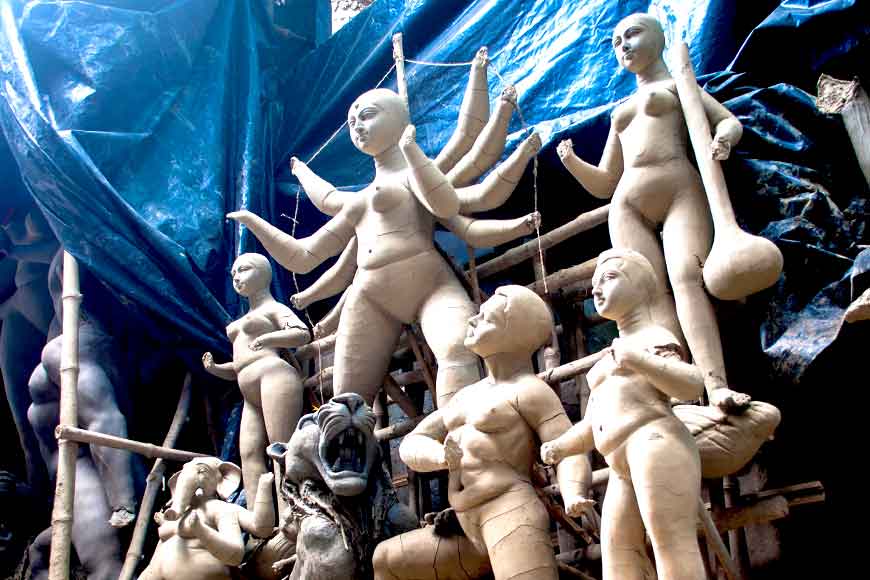
In Changing Visions, Lasting Images: Calcutta Through 300 years, Pratapaditya Pal mentions: ‘A type of art flourished in Calcutta, as nowhere else on the subcontinent, for almost as long as the city has existed. It is that of unfired clay sculpture, consisting primarily of representations of Gods and Goddesses. Such sculptures are usually made for the autumnal celebration of Durra, but numerous other forms of deities are modelled throughout the year both for public and private worship. There is a saying in Bengali that in Bengal there are thirteen festivals in twelve months. All these religious occasions require images modelled with clay, cloth and bamboo, then painted, and finally clothed and ornamented. They are made by traditional artisans and craftsmen, who have for generations, settled in the city. Those who have seen hundreds of such images during a particular Puja, are aware of the astonishing variety of their forms. And those who have observed these festivals, must have noticed how their forms can change dramatically from year to year. Such changes not only reflect subtle comments on the prevailing aesthetic tastes, but occasionally on current political and social realities.’
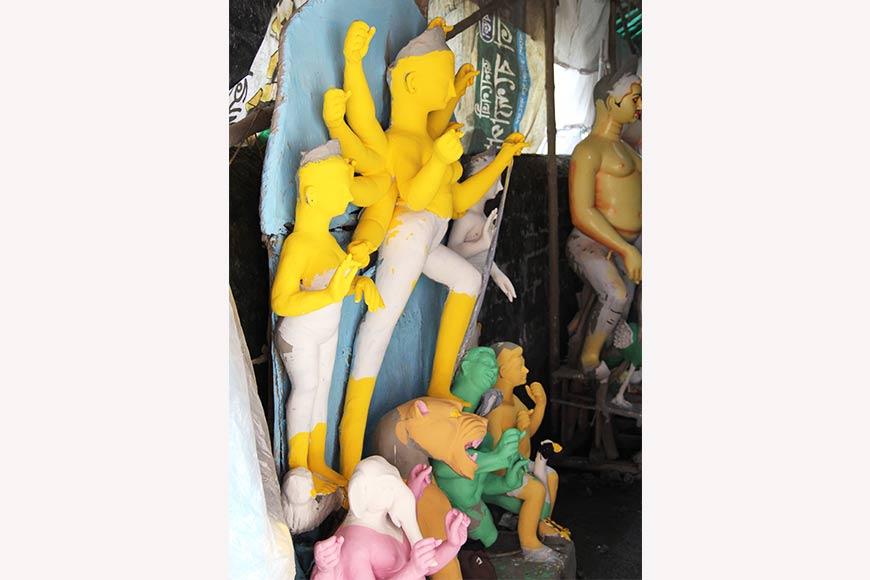
True, the often anonymous creators of such transient clay sculptures were imaginative artists and revealed an intimate knowledge of their patrons’ tastes as well as the socio-economic conditions of the times. Potters in Bengal had many patrons. Any art needs an eye for appreciation and patronage to survive. Raja Krishnachandra of Krishnanagar was one such royal patron of Bengal’s idol making. Meanwhile, zamindars by then had earned riches by serving the British. To gain more attention from their British masters, they started celebrating Durga Puja with great pomp and show. Eventually, number of elite families worshipping Durga increased with the demand graph going higher. Thus, more artisans were brought in from Shantipur, Krishnanagar, Bikrampur and Faridpur. They stayed in wealthy households during festive seasons, to give shape to the deity.
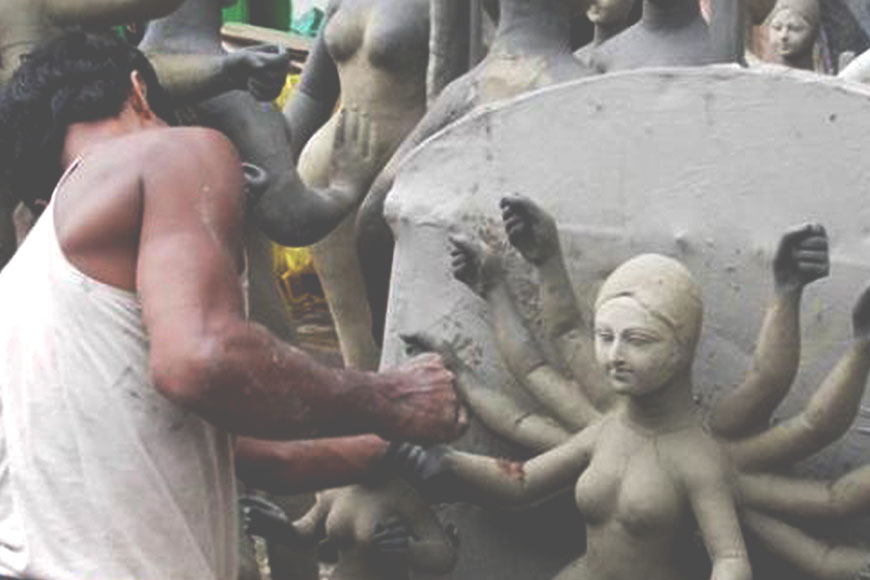
But why did artisans settle in Kumartuli? Well, this area had a locational advantage for deriving raw materials to make idols. Supply of bamboo and clay was in abundance. Several zamindar families stayed nearby, such as Raja Naba Krishna Deb, Radhakanta Deb of Shova Bazaar, Dawn family of Jorasanko, Dutta family of Hatkhola, Khelat Ghosh’s family of Pathuriaghata Street and many more, who were benevolent patrons.



Comments via Facebook